
Gender-neutral language in marketing means using words, phrases, and grammar that do not specify or assume a gender. In practice, this means replacing “he” or “she” with “they”, swapping “ladies and gentlemen” for “everyone”, and rethinking job titles like “spokesman” in favour of “spokesperson”. For global brands, it also means navigating the far more complex challenge of doing this across languages that are grammatically gendered by design.
The business case for this is clear. 64% of consumers took some form of action after seeing an ad they considered diverse or inclusive – and that figure rises to 85% among LGBTQ+ consumers and 77% among millennials. Campaigns with gender-neutral messaging increased by 15% between 2019 and 2024 in the UK alone.
This guide covers the business case, the linguistic mechanics across key languages, brand examples, and the specific challenges that arise when localising gender-neutral content for international markets.
In this post:
- What is gender-neutral language?
- What is gender-neutral language?
- Why gender-neutral language matters for marketing
- What gender-neutral language involves in English
- The history behind the masculine generic
- Gendered languages vs non-gendered languages
- Gender-neutral language across European languages
- The localisation challenge: gender-neutrality does not travel uniformly
- Brand examples: gender-neutral marketing in practice
- When gender-neutral language requires careful handling
- Gender-neutral language guidelines
- Gender-neutral language best practices
- Resistance against gender-neutral language
- How to implement gender-neutral language in your marketing
- Work with Crisol for gender-inclusive multilingual marketing
- Frequently asked questions
What is gender-neutral language?
Simply put, gender-neutral language or gender-inclusive language is a way of speaking that doesn’t use gender pronouns (“he”, “she”, “him”, “her”) or gender-specific nouns (“man”, “king”, “queen”, “prince”, “princess”).
Instead, it uses gender-neutral or gender-inclusive pronouns (“they”, “them”, “their”) and gender-neutral or gender-inclusive nouns (“person”, “people”) when referring to groups of people or an individual whose gender is unknown.
In languages like Spanish, Italian, Portuguese, Hindi, or Arabic, which have gender-specific word endings (e.g., “-o” for masculine gender, “-a” for feminine gender), not paying attention to gender can result in inadvertently excluding people who don’t identify as male or female.
In these gendered languages, gender-neutral language can be a bit more challenging because you need to be aware of the gender endings of all your words.
For example, the word “director” is masculine in Spanish but gender-neutral in English. However, with a little effort, it is possible to create gender-neutral sentences in these languages that are both accurate and respectful.
What is gender-neutral language?
Gender-neutral language (also called gender-inclusive language or genderless language) refers to words, phrases, and grammatical structures that do not specify or assume a person’s gender. The aim is to avoid language that defaults to one gender when referring to people in general, or that excludes people who do not identify within a binary male/female framework.
In English, this covers three main areas: pronouns (using “they” instead of “he” or “she” as a default), job titles and nouns (replacing “spokesman” with “spokesperson”, “mankind” with “humanity”), and forms of address (replacing “ladies and gentlemen” with “everyone” or “guests”).
In grammatically gendered languages like Spanish, French, and German, the challenge is considerably more complex. Gender is built into the structure of the language itself – nouns carry gender, articles inflect for gender, adjectives agree with the nouns they modify. Moving toward gender-neutral language in these contexts requires working against the grammar, not just the vocabulary.
Why gender-neutral language matters for marketing
Gender-based segmentation has been the default for decades. If a product skewed female, the packaging went pink. If it skewed male, the copy got tougher. The logic was simple, even if the execution was often reductive.
That logic is ageing badly.
- BCG research found that context – where we are, who we are with, and what we are doing – has a far greater impact on consumer decisions than gender or demographics. Gender, as a segmentation variable, is weaker than marketers have historically assumed. And as a cultural signal, it is increasingly loaded.
- A McKinsey study found that 48% of Gen Z consumers and 38% of other generational consumers value brands that do not classify products by gender. Among Gen Z and millennials, over half believe binary gender division is outdated. These are not fringe views – they represent a generational shift in how consumers relate to brand language.
- Research published by UN Women and the Unstereotype Alliance in 2024 found that inclusive advertising boosts both sales and brand value, providing quantitative evidence for what many brand teams had observed qualitatively.
This is what makes gender-neutral language more than a values statement. It is a commercial consideration.
The advantages of using gender-neutral language in marketing
While some people argue that gender-inclusive language is unnecessary and gender distinctions should be maintained to avoid confusion, there are many compelling reasons why using gender-inclusive language can be beneficial for marketers.
- You prevent your brand from unintentionally excluding anyone who doesn’t identify as male or female. This includes transgender, gender non-conforming, gender-fluid, or a-gender people, who make up a sizable consumer segment.
- When everyone is included, your brand becomes more diverse and inclusive, which can be a major selling point for today’s socially conscious consumers.
- You communicate that your brand is respectful of all gender identities. In an age where businesses are being called out for using sexist or transphobic language, using gender-neutral language sends a powerful message that your brand is progressive, forward-thinking, and values diversity.
- You tap into a larger market by including values that might count by the time your customer has to make their mind between two options.
In sum, using genderless language in marketing communication is a powerful way to show your commitment to inclusion and respect for all gender identities. It’s a simple change that can have a big impact, and it’s something every business should consider implementing in their marketing strategy.
What gender-neutral language involves in English
English is comparatively well-suited to gender-neutrality. The language does not assign gender to nouns the way French, Spanish, or German do, and several well-established conventions have emerged to reduce gendered assumptions in copy.
Pronouns
The singular “they” is the most widely accepted gender-neutral pronoun in English. It has been used in this way for centuries – appearing in Shakespeare – and its use as a default when gender is unspecified is now standard in most style guides, including the AP Stylebook and the Chicago Manual of Style.
“He or she” and “he/she” have largely fallen out of favour in professional copy, both for readability reasons and because they exclude non-binary readers.
Job titles and nouns
Many gendered job titles have straightforward neutral alternatives:
| Gendered term | Gender-neutral alternative |
|---|---|
| Spokesman | Spokesperson |
| Manpower | Workforce, staff |
| Stewardess | Flight attendant |
| Chairman | Chair, chairperson |
| Fireman | Firefighter |
| Mankind | Humanity, people |
| Policeman | Police officer |
| Actress | Actor |
Forms of address
“Ladies and gentlemen” is giving way to “everyone”, “guests”, or “passengers”. “Dear Sir or Madam” in business correspondence is increasingly replaced by “Dear [Name]” or simply “Hello”. Direct address by name is both more inclusive and more personal.
Structural choices
Sometimes the simplest approach is to rewrite a sentence to remove the pronoun entirely. “When a customer submits their order” avoids the gender question altogether – and often reads more naturally than a pronoun construction would.
The history behind the masculine generic
The use of masculine pronouns or masculine terms to refer to both men and women is not a new phenomenon. It’s quite common in many languages, including English. The pronoun “he” has been used as a gender-neutral pronoun for centuries.
For instance, it is still used in idiomatic expressions and sayings, like “he who hesitates is lost” or “he who laughs last, laughs longest.”
Advocates of the masculine generic claim that the use of masculine pronouns and masculine nouns to refer to both men and women has been common throughout history and is not offensive or exclusive to anyone. However, while it has indeed been common throughout history, here are some facts that might make you reconsider using the masculine generic:
- The first grammars of Modern English were written in the 16th and 17th centuries. In medieval years (5th through 16th centuries), a grammar school was a school for the teaching of Latin to boys from wealthy families, generally of ages ten to fourteen.
- The purpose of these grammars was to set a standard of English language among the students which could be used for them to convert into Latin. Those who wrote the grammars were male, and they wrote with their male audience in mind. The use of masculine words (such as ‘he’), therefore, likely did not reflect a rule that male pronounces could refer to people of either gender.
- Women were rarely literate back then, so there wasn’t much of a need for a singular pronoun that could refer to either men or women. As girls entered the schools of England in the 19th century, the need arose and, in 1850, an Act of Parliament granted use of the generic concept of the word “he” stating “words importing the masculine gender shall be deemed and taken to include females”.
The reason behind the use of masculine as a linguistic convention is that, historically, men have been seen as the default gender. In other words, when people thought about the humanity in general, they tended to picture men. This is evident everywhere from psychological research books – like Sigmund Freud’s – that didn’t include women as part of their research participants, to history books, where women are often erased or dismissed.
Nowadays, however, several cognitive studies have shown that the way we express is representative of our cognitive interpretation of things, either consciously or not. and what’s even more curious is that we even assign gender to words that, by their very definition, should be gender-neutral.
For instance, what do you visualise when you read words such as “person,” “people” or “individual”? Chances are the image in your head is of a man, not a woman. A massive linguistic analysis of more than 630 billion words by psychologists at New York University compared how often words for person (“individual,” “people,” and so on) were associated with terms for a man (“male,” “he”) or a woman (“female,” “she”).
They found that male-related words overlapped with “person” more frequently than female words did. The cultural concept of a person, from this perspective, is more often a man than a woman, according to the study.
Gendered languages vs non-gendered languages
Like we’ve mentioned above, some languages, such as Spanish, Italian, Portuguese, Hindi, and Arabic, always make gender explicit, whereas others, such as English and German, don’t always do so. Some languages, like Chinese and Persian, don’t even assign nouns a gender or already have gender-neutral forms to make inclusive communication easier.
In gendered-languages, most nouns denote a specific gender (masculine or feminine), and there are specific pronouns that reflect the gender of the person or thing being referred to.
What isn’t always evident is that these gender distinctions can influence the way we think. This, in turn, means that certain stereotypes about gender can be perpetuated through language.
Here’s a curious exercise: Ask a Spanish-, Italian-, or Portuguese-speaking friend or acquaintance to translate “the nurse” into their language. In our personal experience, 9 out of 10 times they reply ‘”a enfermera”, “l’infermiera”, or “a enfermeira” (all of them in their female-gendered version).
Same with “the doctor”: “el médico”/”el doctor”, “il medico”/”il dottore”, “o medico”/”o doutor” (all of them in their male-gendered version).
Why is this? What historical assumptions and social constructions underlie this linguistic phenomenon? That’s what Social Science experts have been questioning for a few decades now. And they’ve recently been joined by a big portion of the Millennial Generation and Generation Z.
The use of the singular “they”
In English, when we want to refer to someone without specifying their gender, we can use the pronoun “they” with singular reference. Similarly, there are a number of derived pronouns or adjectives that can be applied to follow this pattern, such as “them”, “their”, and “theirs”. For instance, if we don’t know the gender of the person we are talking about, we can say “someone left their phone on the train”.
In recent years, the use of “they” as a gender-neutral pronoun has become more common in English. Merriam-Webster added it as an official word in 2019. Two years before that, in 2017, the Associated Press Stylebook – the gold standard for journalists – added “they” as a gender-neutral form. the gold standard of sorts for journalists.
In fact, this use of the singular “they” has been around for centuries, and there are a number of examples of it in classic literature. Shakespeare and Jane Austen, among many other famed English writers, used “they” as a gender-neutral pronoun because it was the standard in English until the late 19th century, when Victoria-era grammarians started to advocate for the use of “he” to include both genders (“both” because, at the time, people were believed to be either male or female).
Though the singular “they” and its derivatives are a useful option for gender-neutral language, it is not the only one. For instance, “womxn” or “womyn” are gender-neutral terms that have been proposed as an alternative to “woman”.
These terms were created to address the fact that the word “woman” is often seen as exclusive and excludes transgender and gender non-binary people. Similarly, “Latinx” is a neologism that has been proposed as an English alternative to “Latino” or “Latina”, as a way to stand up against the Spanish grammatical gender.
Gender-neutral language across European languages
This is where things get genuinely complex. Most European languages are grammatically gendered, meaning nouns, articles, and adjectives carry masculine or feminine forms. There is no neutral resting position. Any shift toward gender-inclusive language requires working against the grammar, not just the vocabulary.
Spanish
Spanish assigns grammatical gender to virtually every noun. The default plural form is masculine: a group of 99 women and one man is “ellos” (they, masculine). This has been the subject of ongoing debate in Spanish-speaking countries for decades.
Several solutions have emerged, none of them universally accepted:
- -@: “Amig@s” combines both endings in a single character. Widely used in informal writing but unpronounceable.
- -x: “Latinx”, “amigxs”. Popular in US contexts; almost entirely rejected in Latin America and Spain.
- -e: “Latine”, “amigues”. Gaining traction in Argentina and some urban Spanish-speaking communities. It is pronounceable and is seen by advocates as the most viable spoken option.
- Noun phrases: Using “las personas” (the people) instead of gendered nouns avoids the issue structurally.
For marketing translation into Spanish, the choice of approach depends heavily on the target market. What lands in Buenos Aires may generate significant pushback in Madrid or Mexico City. A Spanish translator who understands regional attitudes is essential – this is not a decision that can be made centrally.

German
German has three grammatical genders – masculine, feminine, and neuter – and a long tradition of using the masculine as the generic form (the “generic masculine”). Efforts to change this have produced several solutions in use:
- Both forms: “Kundinnen und Kunden” (female customers and male customers). Clear but wordy.
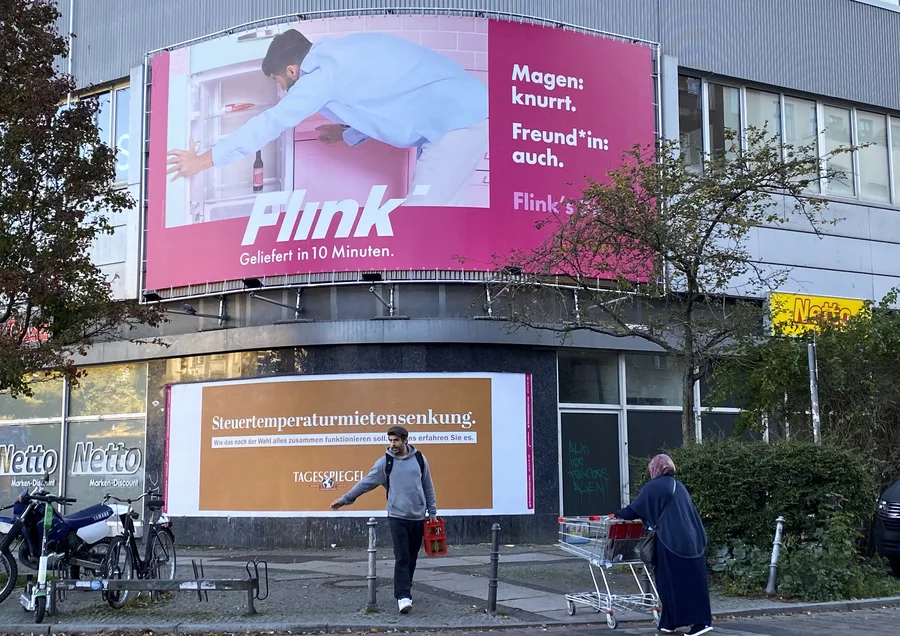
- Gender gap: “Kund*innen” or “Kund:innen”. The asterisk or colon signals a pause in speech to include all genders. Used increasingly in official communications in German-speaking countries.
- Uppercase I: “KundInnen”. An older convention, now largely superseded by the gap notation.
- Neutral nouns: Restructuring sentences to use nouns that are grammatically neuter or inherently neutral.
Germany, Austria, and Switzerland differ in their adoption rates. Some German federal states have issued guidance recommending gender-neutral official language; others have resisted. For brands operating across the German-speaking world, this requires careful localisation judgement – and a translator with both language skills and cultural knowledge. See our post on SEO translation into German for more on how language variation affects search performance.
French
French presents one of the most contested cases. The Académie française, which has formal authority over the French language, has repeatedly resisted gender-neutral reforms. In 2021, the French government banned the use of “inclusive writing” (écriture inclusive) in official documents, on the grounds that it undermined comprehension.
Despite this, informal and commercial use of inclusive French is growing, particularly among younger audiences and progressive brands. Solutions in use include:
- Dot notation: “ami·e·s” uses a middle dot to combine masculine and feminine endings.
- Both forms written out: “les étudiants et étudiantes”. Wordy but unambiguous.
- Neutral restructuring: Preferring abstract nouns (“la clientèle” for customers, rather than “les clients”) sidesteps the issue in many cases.
For brands entering the French market – or the Canadian French market, which has a different cultural relationship to these issues – the localisation approach will differ. Wordbank’s analysis notes that French-speaking Canadians are generally more accepting of gender-neutral language than audiences in France, where pushback can be intense.

The localisation challenge: gender-neutrality does not travel uniformly
This is the most important point for international brands.
Gender-neutral language is not a universal best practice that can be applied consistently across all markets. What reads as progressive and inclusive in one country may read as foreign, confusing, or even politically provocative in another.
Scandinavian countries have extensive legal guidelines supporting inclusive language at all levels. Sweden added the gender-neutral pronoun “hen” to its official dictionary in 2015. Portugal and several Latin American countries have been far more resistant to the same changes.
France’s education ministry banned gender-neutral writing from schools. The Real Academia Española, which governs the Spanish language, has rejected the use of “e” as a generic ending.
This matters enormously for brands running multilingual campaigns. A commitment to gender-neutral language in English does not automatically translate into what that commitment looks like in German, French, or Spanish. The language, the market, and the cultural moment all shape what is possible and what is appropriate.
The practical implication: gender-neutral language decisions for international markets require in-market linguistic expertise, not just a style guide translated from the English original. A localisation strategy that imposes one market’s language norms on another tends to produce copy that feels inauthentic – or, worse, tone-deaf.
Brand examples: gender-neutral marketing in practice
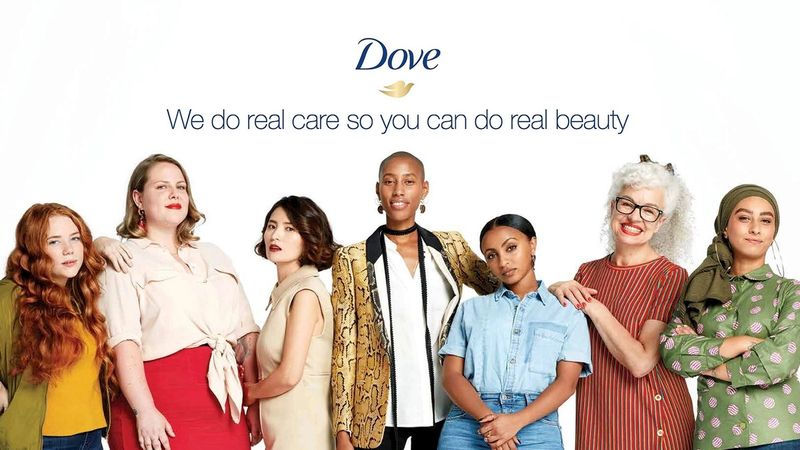
Dove
Dove’s long-running “Real Beauty” campaign has consistently moved away from gendered beauty ideals, using diverse casting and language that addresses people across genders and body types. The campaign is cited regularly in research on inclusive marketing effectiveness.
IKEA
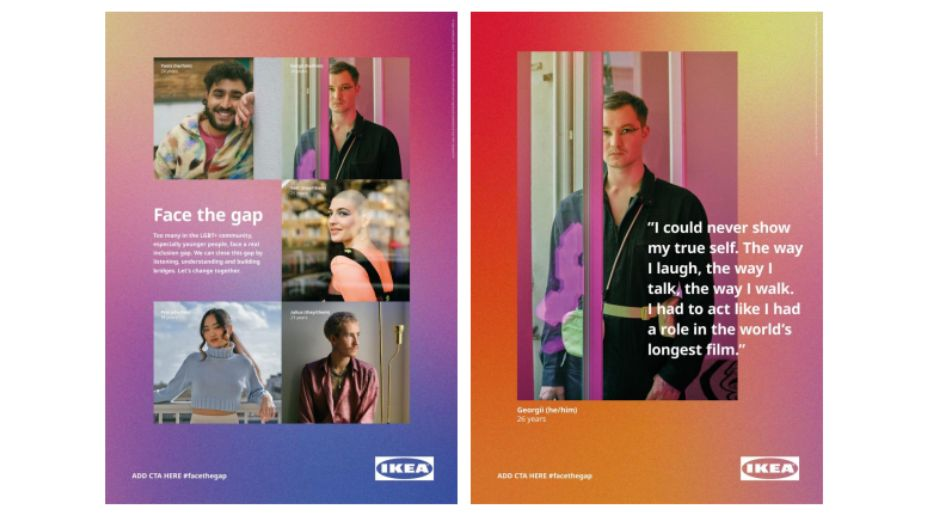
IKEA is widely cited as a leading example of a gender-neutral brand. Its catalogue and store environment have long avoided gendering products or spaces, and its marketing language tends toward the functional and universal rather than the aspirationally gendered.
Japan Airlines
Japan Airlines was the first Asian airline to replace “ladies and gentlemen” with gender-neutral address across its flights and airports. A simple language change with clear symbolic weight.
Bic
When Bic launched its Made FOR YOU razor, the campaign was explicitly gender-neutral. A survey conducted in development found that 67% of 18–24 year olds wanted gender-neutral grooming products – confirming the commercial rationale before the product launched.

When gender-neutral language requires careful handling
Gender-neutral language is generally a positive direction for marketing. But there are situations where a blanket approach causes problems.
When it conflicts with local norms
As covered above, forcing gender-neutral language into markets where it has not been culturally adopted can generate the opposite of the intended effect. Authenticity matters more than consistency. A Spanish-language campaign that uses “e” endings across all Latin American markets will feel artificial to the vast majority of those audiences.
When the brand has a strongly gendered heritage
Brands with a long-established gendered identity – luxury fragrance houses, for instance, or heritage clothing brands with distinct menswear and womenswear lines – face a more complex decision. Moving toward gender-neutral language without rethinking the product positioning creates a mismatch between the words and the experience.
When localised grammar makes neutrality impractical
In highly inflected languages, gender-neutral language can produce sentences that are genuinely difficult to read. Forcing neutrality for its own sake, at the cost of comprehension, serves neither the brand nor the reader. In these cases, the most practical approach is usually to find sentence structures that sidestep the gender question rather than confront it directly.
When the content is regulated
Legal, medical, and financial copy often needs to refer to specific individuals in specific roles. Gender-neutral language is still achievable in regulated content, but it requires care not to introduce ambiguity that could create compliance issues.
Gender-neutral language guidelines
A number of gender-neutral guidelines have been created over the years. These apply not just to marketing, but to workplace communication, education, the public sphere, and beyond.
There are countless examples: the UK Government Legal Department, for example, launched a practical guide to gender-neutral writing in 2019, and the issue is openly addressed on the Government’s website:
“In legal writing, masculine language has traditionally been used to refer to people regardless of their gender. The practice for legislation changed in 2007. Since then, it has been government policy to write legislation in gender-neutral language. The use of masculine words to cover people regardless of gender or sex is unnecessary, inaccurate and tends to reinforce historic gender stereotypes. In other words, gender-neutral writing is about clarity, inclusion and equality.”
UK Government, Civil Service Blog
The European Parliament has also published guidelines on gender-neutral language, as have the United Nations.
And then there are the style guides of various publishing houses, online newspapers, and private companies, all of which have their own recommendations for avoiding gender bias in language:
- How to Make Your Organization’s Language More Inclusive – Harvard Business Revie
- A Guide to Inclusive Language and Copy – Boldist
- How to Use and Promote Inclusive Language at Your Organisation – Hubspot
With a quick Google search, you can find all sorts of gender-neutral language guidelines in a myriad of languages. This is a great starting point for any business looking to become more inclusive in its marketing.
Gender-neutral language best practices
Below are some gender-neutral language best practices for organisations when it comes communicating in a gender-neutral way.
In the workplace
Respect is always the starting point in the workplace. Whether you’re addressing an email to a colleague or giving a presentation to a group, it’s important to be mindful of the way you speak. Gender-neutral language should be used as much as possible to avoid alienating or offending anyone:
- When writing emails, use gender-neutral greetings such as “Hello all”, “Hi everyone”, or “Good morning/afternoon”. If you need to address someone specifically, use their first and last name.
- Use gender-inclusive job titles: “Sales associate” instead of “salesman”, “the server” instead of “waitress”, “flight attendant” instead of “stewardess”, etc.
- Use gender-neutral pronouns such as “they”, “them”, and “their” when referring to someone whose gender you don’t know.
- When speaking to a group of people, use gender-neutral terms such as “everyone”, “colleagues”.
Besides being inclusive by the way you refer to others in the workplace, you can also take gender into account when delegating tasks, offering promotions, and setting salaries so that you’re sure you’re not underestimating anyone based on their gender and that you’re giving everyone the chance to reach their full potential.
In marketing
Marketing is one of the most creative industries out there and, as such, it has a lot of power to shape the way we see gender roles in society. For many years, women have been portrayed as homemakers while men have been shown as the breadwinners.
However, today’s world is changing the rules and gender stereotypes are no longer as clear-cut as they used to be. This is how today we see cleaning products advertisements that feature men doing the laundry or cleaning the bathroom, as well as women in ads for power tools.
When it comes to gender sensitivity in marketing, the main goal is to make sure your brand is not excluding anyone based on their gender identity. Here are some ways to do that:
- Use gender-neutral terms such as “parent” instead of “mother”, “sibling” instead of “brother”, or “partner” instead of “husband”.
- Build product descriptions that don’t make assumptions about the gender of the person using them. This also implies avoiding stereotyped performances. For example, instead of “this dress is perfect for a night out”, say “this dress is perfect for a special occasion”.
- Avoid making suggestions that are based on sexism, such as “this is the perfect gift for your girlfriend/wife”.
- Use gender-neutral pronouns such as “they”, “them”, and “their” when referring to someone whose gender you don’t know.
- Create gender-awareness campaigns that challenge gender stereotypes. Some particularly successful marketing campaigns are Dove’s “Real Beauty” campaign and Pantene’s “Sorry Not Sorry” commercial. These campaigns not only challenge gender stereotypes but also empower women and send a strong message of inclusivity.
- If you’re trying to set a bond with a particular client, you may ask them about their self-perceived gender or what do they want to be called instead of making assumptions or using gendered vocatives such as “Miss”, “Madam” or “Sir”.
In the public sphere
When interacting in public places such as parliaments, town halls, conferences, or hospitals, communication has to be clear and concise. Many institutions have started using gender-neutral language in their bylaws and procedures manuals and follow gender-inclusive practices, such as:
- Avoiding the generic use of “man” and its derivatives. Alternatives: “humanity” (for “mankind”), “staff” (for “manpower”), “a French person” (for “Frenchman”), “the French” or “French people” (for “Frenchmen”), “political leaders” (for “statesmen”).
- Rephrasing completely when necessary. For instance, instead of “the official shall carry out his duties,” the following could be used:
- Plural forms (“officials shall carry out their duties…”)
- The imperative (“carry out your duties”)
- Pronoun omission (“shall carry out duties”)
- The passive voice (“duties shall be carried out”)
- Using the generic “they” and its derivatives
- Using gender-neutral job titles
Resistance against gender-neutral language
Even though gender-neutral language is becoming more and more common, there is still resistance against it, especially from academic and legal circles.
Some people argue that gender-neutral language is unnatural and that it’s impossible to get rid of gender markers altogether. Others claim that gender-neutral language is a ploy by feminists to erase gender distinctions altogether and that it’s nothing more than political correctness gone too far. And there’s still a large number of people who believe that gender-neutral language is unnecessary and that it will only lead to more confusion because it “goes against grammar rules.”
The Académie Française
Among the ones who are strongly against gender-neutral language, we can find the Académie Française. Back in 2017, it stated on its website:
“Faced with the aberration of ‘inclusive writing’, the French language finds itself in mortal danger” and “We find it hard to identify the desired objective and how to overcome the practical obstacles of writing and reading – both visually and out loud – and pronunciation (…) This will increase the burden for teachers and even more so for readers.”
The Royal Spanish Academy
The Royal Spanish Academy (RAE) is the authority on the Spanish language. They are in charge of creating and updating the dictionary, as well as setting the rules of grammar, spelling, and vocabulary.
Even though they haven’t released an official guideline about gender-neutral language yet, they have released a report where they share their position in this regard.
As an institution, they declare themselves completely against any forms of sexism against women or the LGBTI+ community. However, they deny the fact that language is sexist itself. Instead, they say speakers are the ones who use it in a sexist way. For that reason, they don’t believe gender-neutral language is the solution and they are not planning to change the current rules of grammar.
The media
The media is a powerful tool that can be used for good or for bad. Unfortunately, there’s a lot of negativity surrounding gender-neutral language in the media, especially from right-wing and conservative outlets.
Many of these outlets argue that gender-neutral language is a waste of time, that it’s nothing more than political correctness gone too far, and that feminism is a movement that’s trying to destroy the gender binary.
They also speak of a made-up “gender ideology” that’s “being forced” on the general population and that it’s a threat to traditional family values.
What we need right now is more positive media coverage about gender-neutral language. We need to show people that it’s not a bad thing, that it’s something that can make our lives easier, and that it’s here to stay.
How to implement gender-neutral language in your marketing
Getting this right in practice requires more than switching “him” to “them”.
Audit existing copy first. Before writing new content, review what you have. Look for gendered pronouns, job titles, forms of address, and product language. Many brands are surprised by how pervasive gendered assumptions are in copy that was never consciously written to be gendered.
Build a glossary by language. The preferred gender-neutral terms and constructions vary by language and by market. A centralised glossary, agreed with in-market translators, prevents different teams from making different choices and creating inconsistency at scale. This connects to the multilingual keyword research process for brands running SEO across markets.
Work with in-market specialists. The decisions involved in gender-neutral language for French, Spanish, or German are not ones that can be made from London or New York. They require knowledge of what is currently acceptable in each specific market, awareness of how the debate is evolving, and sensitivity to how the brand’s positioning interacts with the language choices being made.
Update forms and UI copy. Gender-neutral marketing extends beyond editorial content. Contact forms, checkout flows, and product category labels are all places where gendered assumptions tend to embed themselves. Title fields that default to “Mr/Mrs/Ms” are an easy win: “Mx” as an option, or removing the title field entirely, costs nothing and signals something.
Align internal and external language. Maintaining consistent inclusive language in-house while putting a different foot forward externally creates a trust problem with both staff and consumers. Inclusive language in external marketing works best when it reflects genuine internal norms.
Work with Crisol for gender-inclusive multilingual marketing
Crisol is an award-winning marketing and SEO translation agency specialising in English-Spanish and English-German markets. We produce copy that sounds like it belongs in the target market – and that means navigating the specific, evolving conventions around gender-neutral language in each language and territory we work in.
Whether you need Spanish campaign copy adapted for different regional markets, German content that handles gender-inclusive grammar in a way that reads naturally, or strategic advice on how to approach inclusive language across a multilingual content programme, we can help.
Get in touch to talk through your project.
Frequently asked questions
What is gender-neutral language in marketing? Gender-neutral language in marketing means using words and constructions that do not assume or specify the gender of the reader or the subject. In English, this includes using “they” as a singular pronoun, replacing gendered job titles with neutral alternatives, and avoiding assumptions about who uses a product based on gender.
Why are brands using gender-neutral language? The reasons are commercial as much as they are ethical. 64% of consumers report taking action after seeing an ad they considered inclusive. Research consistently shows that younger consumers are more likely to consider or purchase from brands that do not rely on binary gender assumptions. Gender-neutral language also expands the addressable market by not excluding anyone who does not fit traditional gender categories.
Does gender-neutral language work across all languages? No, and this is a critical point for international brands. Languages like French, Spanish, and German are grammatically gendered, which means achieving gender-neutrality requires structural and grammatical adaptation, not just vocabulary substitution. The approaches available differ by language, and their cultural acceptability differs by market. What is widely accepted in Sweden or Argentina may be controversial in France or Mexico.
What are the risks of getting gender-neutral language wrong in translation? Copy that imposes one market’s language norms on another tends to feel inauthentic or politically charged in unintended ways. In France, the use of inclusive writing (écriture inclusive) in a commercial context can alienate conservative audiences and prompt media criticism. In Latin America, the use of “x” endings (as in “Latinx”) is largely rejected by Spanish-speaking audiences there. The risk is that a language choice designed to be inclusive ends up feeling foreign or condescending.
How do Spanish brands handle gender-neutral marketing? It varies significantly by country. Argentina has been the most active in adopting “e” endings as a spoken gender-neutral form. Spain and Mexico have been more resistant. Most established brands operating across multiple Spanish-speaking markets use neutral noun phrases (such as “las personas”) or restructure sentences to avoid the issue rather than adopting neologisms that may not be accepted everywhere.
How does German handle gender-neutral language? German uses several conventions: writing out both forms in full (“Kundinnen und Kunden”), using the gender gap notation with an asterisk or colon (“Kund*innen”, “Kund:innen”), or restructuring sentences to use grammatically neutral constructions. The gender gap notation is increasingly common in official and corporate German, though it generates ongoing debate. Regional variation between Germany, Austria, and Switzerland is significant.
Is gender-neutral language a passing trend? The evidence suggests not. Consumer research consistently shows growing preference for inclusive marketing, particularly among younger demographics. McKinsey data shows that 48% of Gen Z consumers value brands that do not classify products by gender. The linguistic and cultural debates will continue to evolve, but the underlying expectation of inclusivity in brand communication is structural rather than cyclical.
What is the connection between gender-neutral language and transcreation? When a brand’s campaign involves culturally specific gender expression – humour, wordplay, or messaging that depends on gendered assumptions in the source language – transcreation is often the right tool rather than translation. Transcreation allows the target-language version to be rebuilt from the emotional intent rather than the literal words, which gives the translator the latitude to handle gender in a way that is appropriate for the target market rather than forcing an equivalent of the source language’s approach.

Author: Maria Scheibengraf
Maria Scheibengraf is an English-to-Spanish marketing and SEO translator specialised in software (SaaS, martech, fintech), and Operations Manager at Crisol Translation Services, which she co-founded in 2016. With a solid background in programming and marketing, Maria has an in-depth understanding of the technical intricacies involved in software programs, websites, and digital platforms. Maria is also the author of The SEO Translation Bible.


