
Multilingual sentiment analysis is the automated process of detecting whether text is positive, negative, or neutral across more than one language. It uses natural language processing (NLP) and machine learning to read customer reviews, social media posts, support tickets, and survey responses in their original language – and return a sentiment score that reflects what people actually meant, in the context of their culture and language.
The short version: if your customers write in German, Spanish, French, or any other language, running sentiment analysis only on English data is not just incomplete. It is actively misleading.
In this post:
- What is sentiment analysis?
- What makes sentiment analysis multilingual?
- Why is multilingual sentiment analysis important?
- How does multilingual sentiment analysis apply to marketing?
- The connection between emotions and language
- The four main approaches to multilingual sentiment modelling
- Types of sentiment analysis
- Where multilingual sentiment analysis is used
- Key challenges in multilingual sentiment analysis
- Why English-only sentiment analysis fails international brands
- The cultural layer: what machines still struggle with
- Machine translation and sentiment: where it helps, where it does not
- The human expert role in multilingual sentiment systems
- What to look for in a multilingual sentiment tool
- Building a multilingual sentiment workflow
- How multilingual sentiment analysis connects to international SEO and content
- Working with multilingual sentiment data: questions worth asking
- How Crisol can help
- Frequently asked questions about multilingual sentiment analysis
What is sentiment analysis?
Sentiment analysis – also called opinion mining – is a branch of NLP concerned with identifying and extracting the emotional tone from text. At its most basic, it classifies content as positive, negative, or neutral. More advanced systems go further.
Levels of sentiment analysis:
| Level | What it measures | Example |
|---|---|---|
| Polarity | Positive / negative / neutral | “The product is great” → positive |
| Aspect-based | Sentiment toward specific features | “Great camera, terrible battery” → mixed by aspect |
| Emotion detection | Named emotions (joy, anger, frustration, fear) | “I’m furious about the delay” → anger |
| Intensity scoring | Strength of sentiment on a scale | “I hate it” vs. “I’m not keen” |
Polarity-based analysis is the most widely used because it is the easiest to implement at scale. Aspect-based analysis is more demanding but significantly more useful for product teams who need to know which features customers are praising or criticising, not just whether they liked the product overall.
The core technology behind all of this is NLP combined with machine learning. Models are trained on annotated datasets – text samples where human experts have labelled the sentiment – so the algorithm can learn patterns, associations between words and emotional states, and the contextual signals that shift meaning.
What makes sentiment analysis multilingual?
Standard sentiment analysis was developed primarily for English. Most training datasets, benchmark models, and commercial tools were built on English-language data and then retrofitted for other languages with varying results.
Multilingual sentiment analysis addresses this directly. It means running sentiment scoring in the native language of the text, using models that understand the grammar, idiom, and cultural weight of that language – rather than translating everything to English first and hoping nothing gets lost.
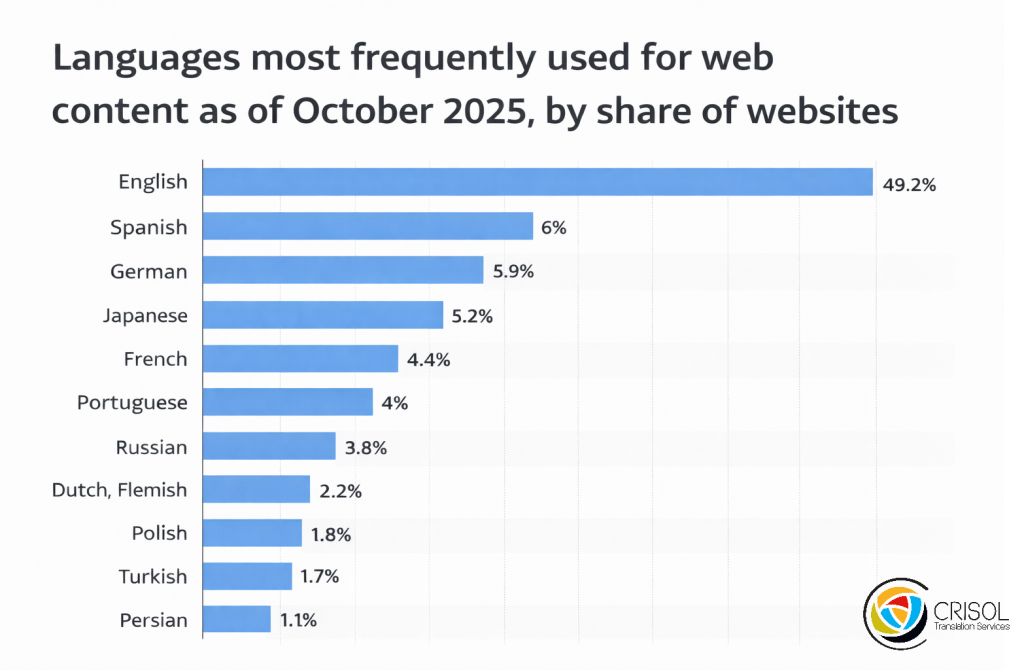
According to data cited by Shaip, English represents fewer than one in five of the world’s speakers. Many customers are more expressive and more candid when they write in their own language. A review left in Spanish or Japanese is often more revealing than the same customer’s English summary – and a sentiment model that cannot read it is missing the signal entirely.
Why is multilingual sentiment analysis important?
Sentiment drives behaviour.
When people feel positively about a product, they are more likely to buy it again and recommend it to others. When voters respond emotionally to a political message or public figure, that sentiment can influence elections. When online discussion signals rising tension around an event, authorities may act to prevent harm.
Emotions and consumer decisions are closely tied to cultural context. Analysing sentiment exclusively in English ignores how meaning, tone, and emotional weight shift across languages. The parallel with SEO and SEO translation is useful here. Without understanding cultural intent, even technically correct work can miss its audience.
For organisations with international users or customers, sentiment analysis cannot be limited to one language. If you want to understand how customers in Portugal feel, analysing their posts in Portuguese is not optional. Without it, misinterpretation becomes likely.
How does multilingual sentiment analysis apply to marketing?
In marketing, sentiment analysis helps teams understand how audiences respond to products, campaigns, and brand messages. These insights inform decisions across the funnel, from positioning and messaging to customer support and product development.
Used well, sentiment analysis supports:
- Reputation management
- Consumer behaviour analysis
- Brand management
- Brand awareness
- Competitive intelligence
- Customer service
Consider a product launch that receives a negative reaction online. Sentiment data can help pinpoint the source of dissatisfaction, whether that relates to pricing, design choices, ingredients, or expectations set by the campaign itself. With that context, teams can respond with more precision.
A frequently cited example is Vans and its positioning around creative self-expression. Doug Palladini, Global Brand President at Vans, has described the brand’s focus on building culture from the inside out with people already connected to it. Multilingual sentiment analysis plays a key role in understanding how that culture shows up in different communities.
In 2016, Buezo and Weleh Dennis launched Kids of Immigrants, a unisex streetwear line reflecting the immigrant experience. Social media users connected with the message and shared it across networks, using multiple languages. Vans identified the sentiment behind that engagement and developed a collaboration rooted in local cultural meaning. The resulting partnership aligned with Vans’ broader mission “To enable creative expression—and inspire youth culture —by celebrating and encouraging the Off the Wall attitude that comes from expressing your true self.”
The connection between emotions and language
Emotions are shaped by culture, and language is one of the main vehicles through which that shaping occurs. Different languages offer different ways to name, soften, intensify, or contextualise emotional states.
Research supports this view. A study by Shaver, Schwartz, Kirson, and O’Connor (1987) found that people from different cultural backgrounds vary not only in how often they experience particular emotions, but also in how they label and interpret them. Emotional categories themselves differ across cultures.
Mesquita and Frijda (1992) showed that cultural norms influence how emotions are regulated and expressed. Their findings suggest that when emotions are considered appropriate or inappropriate, intense or restrained, depends on shared social expectations.
Psychologist Lisa Feldman Barrett has argued that emotions are constructed rather than universal reactions, shaped by learning, context, and language. From this perspective, emotional meaning is not fixed. It is built through cultural experience.
For sentiment analysis, this has practical consequences. Treating emotion as universal increases the risk of misclassification. Multilingual sentiment analysis, when informed by linguistic and cultural understanding, allows organisations to interpret emotional signals with greater accuracy.
The four main approaches to multilingual sentiment modelling
Sentiment analysis relies on a combination of machine learning, data analysis techniques, and natural language processing (NLP) to convert unstructured text into sentiment scores.
NLP brings together computer science, artificial intelligence, and linguistics to enable machines to process human language. Models analyse words, phrases, and patterns to infer sentiment.
Machine learning and NLP aren’t the only ways to conduct sentiment analysis, though – there are several techniques available, among which human analysis remains possible, in theory. A person could collect posts, read them, and label sentiment manually. In practice, this approach does not scale. Algorithms process large volumes of data faster and more consistently.
Machine learning models learn sentiment from annotated training data. These datasets consist of texts labelled by humans. For multilingual sentiment analysis, that annotation requires marketing translation specialists who understand both marketing context and linguistic nuance.
Using this data, models learn associations between language features and sentiment, producing scores that can be tracked and compared over time.
Sentiment analysis systems can be rule-based, automatic, or hybrid.
- Rule-based: These algorithms perform the analysis by applying rules programmed by experts. For example, sentiment analysis rules might look for specific words or phrases that indicate sentiment, such as “great”, “outstanding”, and “terrible”. An example is the VADER sentiment analysis model, which stands for Valence Aware Dictionary and Sentiment Reasoner).
- Automatic: these models perform sentiment analysis without human interaction through machine learning and training samples to infer sentiment scores.
- Hybrid: These sentiment scoring systems combine both sentiment scoring approaches.
There is no single right way to build a multilingual sentiment system. Practitioners use four main approaches, each with real advantages and real costs.
1. Translation-based pipelines
The simplest approach: translate everything into English, then run an existing English sentiment model. This works reasonably well for straightforward content and has the advantage of using mature, well-validated English models.
The problem is translation loss. Sarcasm, irony, culturally specific expressions, and negation patterns often shift or disappear in translation. Research published in Nature Scientific Reports found that even strong translation-based ensemble models using Google Translate achieved F1 scores above 86% – impressive, but still below what native-language models can reach for high-resource languages, and that accuracy drops sharply for languages where translation quality is lower.
2. Native multilingual models
Models like mBERT (Multilingual BERT) and XLM-RoBERTa are pre-trained on text from 100+ languages simultaneously. They can classify sentiment directly in the source language without translation, and they develop a shared representation of meaning across languages.
mBERT, developed by Google, covers 104 languages and uses masked language modelling to learn context. XLM-RoBERTa (from Meta AI) is generally considered the stronger performer across a broader range of languages, particularly where training data is limited.
The trade-off: multilingual pre-training does not guarantee consistent accuracy across all languages. High-resource languages like German, Spanish, and French perform well. Low-resource languages – many African, South Asian, and Southeast Asian languages – remain under-served, and dialects add further complexity.
3. Cross-lingual embeddings
This approach maps text from different languages into a shared vector space so that similar meanings are positioned close together regardless of language. A classifier trained primarily on English data can then generalise to Spanish, French, or Hindi with reasonable accuracy, without being retrained from scratch.
It reduces the data problem for new languages, but it still inherits the biases of whichever language the base model was trained on.
4. Hybrid systems
The most realistic option for businesses operating at scale. Hybrid systems combine transformer-based multilingual models with language-specific rule sets, lexicons built by native speakers, and human-in-the-loop review for edge cases. They trade simplicity for accuracy, which is usually the right call for any customer-facing application.

Types of sentiment analysis
To establish the different types of sentiment analysis, we first need to establish the criteria on which the classification is made.
Monolingual sentiment analysis vs multilingual sentiment analysis
Monolingual sentiment analysis focuses on a single language. Multilingual sentiment analysis covers two or more languages.
Because sentiment is shaped by linguistic structure and cultural norms, analysing sentiment in the audience’s native language supports more reliable interpretation.
Polarity-based sentiment analysis vs advanced sentiment analysis
Polarity-based analysis classifies sentiment as positive, negative, or neutral, often based on individual words.
More advanced approaches incorporate additional linguistic information, such as syntax and semantics, to take into account other factors such as:
- The strength of the sentiment: Polarity categories are expanded (very positive, positive, neutral, negative, very negative). This is called fine-grained sentiment analysis.
- Emotion detection: The analysis goes beyond the positive/negative dichotomy to look at emotional states such as enjoyment, happiness, frustration, anger, surprise, disgust, etc.
- Context: The analysis takes into account sentiment in other parts of the text, such as whether sentiment is strong or weak elsewhere, what sentiment words are nearby, etc. This is useful to identify sarcasm and avoid false sentiment results.
- The time or place when the sentiment was expressed: sentiment changes depending on the time and situation, such as sentiment expressed during a national tragedy or after an election.
General sentiment analysis vs aspect-based sentiment analysis
General sentiment analysis evaluates sentiment towards an entity as a whole.
Aspect-based sentiment analysis focuses on specific attributes. A single post might praise a hotel’s location while criticising its food. Aspect-based analysis separates those evaluations.
Where multilingual sentiment analysis is used
Social media monitoring
The most common use case. Global brands track mentions across languages to catch PR problems early, identify enthusiastic advocates, and monitor how campaign messages land across markets. A campaign that generates positive sentiment in the UK can generate confusion or even irritation in a market where the phrasing does not translate well culturally.
Customer support and service
Sentiment scoring on support tickets, chat logs, and email threads lets customer service teams prioritise escalations, identify agents with struggling customer relationships, and track satisfaction patterns by language or region. A 2023 Gartner study cited by Shaip found 80% of companies are using AI to improve customer experience, with almost half of support teams already deploying AI-powered tools.
Market research and product development
Before launching a product in a new market, companies run sentiment analysis on existing category discussions in that language to understand what customers already like, dislike, and look for. This is cheaper and faster than primary research, though it works best as a complement to qualitative work rather than a replacement.
Review analysis in e-commerce
Marketplace reviews in German, Italian, Japanese, or Portuguese contain product feedback that product teams rarely read directly. Sentiment analysis at scale surfaces patterns – a specific product feature generating negative mentions in French reviews, for example – that would be invisible in English aggregate data.
Brand perception across markets
Companies entering new regions need to understand their baseline reputation in those markets. Multilingual sentiment analysis on news coverage, forum discussions, and social content gives a faster read than commissioned research, provided the models are appropriately tuned for each market.
Key challenges in multilingual sentiment analysis
Even good systems run into predictable problems. Understanding these helps set realistic expectations for what sentiment scores can and cannot tell you.
| Challenge | Why it matters |
|---|---|
| Low-resource languages | Models trained primarily on high-resource languages (English, German, Spanish) perform poorly on languages with limited training data |
| Code-switching | Social media users frequently mix languages mid-sentence; most models are not trained to handle this |
| Dialectal variation | Spanish in Spain differs meaningfully from Argentine, Mexican, or Colombian Spanish; a single “Spanish” model may miss regional sentiment markers |
| Sarcasm and irony | Requires cultural and contextual knowledge that current models handle inconsistently |
| Negation handling | Sentence structures vary widely; models trained on English negation patterns struggle in languages where negation works differently |
| Training data bias | Datasets concentrated in Western, high-resource languages produce models that over-flag certain cultural communication styles as negative |
| Emoji interpretation | Stripping emojis removes meaning; including them requires culturally specific interpretation |
| Domain-specific language | Sentiment in medical, legal, or technical contexts differs from consumer language; general models need domain tuning |
AIMultiple’s overview of multilingual sentiment challenges highlights that the bias problem is particularly consequential for healthcare and social listening applications, where misclassifying distress signals in underrepresented languages has real consequences.
Why English-only sentiment analysis fails international brands
Consider a company tracking brand sentiment after a product launch in Germany, Mexico, and France. If they run sentiment analysis only on English-language mentions, they are capturing the opinions of a small subset of their actual audience – and missing the reactions of customers who are most likely to write in their own language.
Research from the consumer sentiment analysis market estimates that only 35% of companies use multilingual sentiment analysis solutions, despite over 60% of global customers engaging with brands in their native language. That gap is where misread sentiment lives.
The errors are not random. They are systematic. English-language models tend to:
- Misread negation structures in languages where negation appears at different points in the sentence (French “ne…pas”, German verb-final constructions)
- Miss sarcasm that relies on culturally specific references
- Underweight sentiment in languages that express intensity through word order rather than vocabulary
- Mislabel text containing code-switching – sentences where speakers mix two languages fluidly, which is extremely common in social media content from bilingual communities
For a brand that has invested in multilingual SEO and marketing translation to reach those audiences, running English-only sentiment analysis on the results is a significant blind spot.
The cultural layer: what machines still struggle with
This is the part that separates passable multilingual sentiment from genuinely reliable multilingual sentiment. Language is not just vocabulary and grammar. How people express dissatisfaction, enthusiasm, or distrust is shaped by cultural norms that no training dataset fully captures.
Sarcasm and irony
Sarcasm detection is one of the most studied problems in NLP precisely because it is so difficult. A sentence like “Oh great, another delay” carries negative sentiment, but a naive polarity model reads “great” as positive. In languages beyond English, this becomes harder still – sarcasm markers shift, irony is sometimes structural rather than lexical, and the signals that flag insincerity to a native speaker are often invisible to a model trained on formal text.
Keylabs notes that developing cross-cultural emotion analysis requires adapting to local communication norms, not just syntax. A phrase that sounds passively aggressive in one culture is neutral small talk in another.
Idioms and fixed expressions
“Das ist nicht mein Bier” (literally “that’s not my beer”) is a German expression meaning “that’s not my problem.” A translation-based pipeline may return the literal meaning; a native-language model trained on colloquial German text handles it correctly. Multiply this across the idiomatic density of any language and the margin for error in translation-first systems becomes significant.
Grammatical gender and formality
Many European languages encode formality grammatically. Spanish has tú and usted; German has du and Sie; French has tu and vous. The choice of register carries sentiment information – a customer who switches from polite to informal forms within a single support thread may be signalling frustration. English has no equivalent signal. Models that do not account for register miss this entirely.
Emojis and non-text sentiment signals
Emojis complicate things further. The same emoji carries different connotations across languages and platforms. 🙏 means gratitude in one context and a plea for mercy in another. Across cultures, the emotional weight shifts further. Most sentiment tools strip emojis as noise, which can invert the sentiment of short social media posts where the emoji is carrying most of the meaning.
Machine translation and sentiment: where it helps, where it does not
A common question is whether you can simply translate customer feedback into English and run English sentiment models on it. The answer depends on what you need.
Translation-based sentiment works reasonably well when:
- Text is straightforward and descriptive (product reviews with minimal idiom or sarcasm)
- You are working with high-resource language pairs where translation quality is high
- You need a rough directional read rather than fine-grained analysis
- Native-language models for your target language are not available or well-validated
Translation-based sentiment underperforms when:
- The source text is colloquial, contains slang, or includes heavy idiom use
- Sarcasm or irony is present
- The language pair has weaker translation quality (many Asian, African, and Middle Eastern languages)
- You need aspect-level rather than document-level scores
- The content includes code-switching
Research published in arXiv on ensemble transformer approaches confirms that XLM-RoBERTa consistently outperforms translation-based pipelines for cross-lingual sentiment tasks, particularly where source language training data is available. For languages where no labelled sentiment data exists, translation-based approaches remain the practical fallback.
This maps directly onto how marketing translation works in practice. The translated text may be technically accurate but carry different emotional weight than the source. A sentiment model reading a translation cannot know what was lost.
The human expert role in multilingual sentiment systems
Automated sentiment models are not the whole system. The most accurate multilingual sentiment implementations include human expertise at several points.
Annotation. Training data for each language needs to be labelled by native-speaking annotators who understand not just the language but the domain and cultural context. A German financial services reviewer and a German lifestyle blogger use the language differently. Training data built without domain-specific annotators produces models with domain blind spots.
Lexicon development. Rule-based components of hybrid systems require sentiment lexicons – curated lists of positive and negative words and phrases specific to each language and domain. Building these well requires linguists, not just native speakers.
Edge case review. Human-in-the-loop systems where analysts review low-confidence model outputs improve accuracy over time and catch the cultural nuances automated models miss. This is particularly important for high-stakes applications like brand safety monitoring or customer distress detection.
Translation quality control. Where translation-based pipelines are used, the translation quality directly determines the sentiment accuracy. Professional SEO translation and marketing translation specialists who understand both source and target markets can identify where translations flatten or invert the original emotional tone in ways that would break automated sentiment scoring.
This is why the relationship between sentiment analysis and professional translation expertise is closer than it might appear. The cultural and linguistic knowledge that makes a translator good at their job is the same knowledge that exposes where automated sentiment systems are likely to fail.
What to look for in a multilingual sentiment tool
The sentiment analytics market was valued at US$5.1 billion in 2024 and is projected to reach US$11.4 billion by 2030, growing at a CAGR of 14.3%. There are many tools available, and the quality differences matter.
When evaluating any multilingual sentiment tool, the following questions are worth asking:
- Which languages are genuinely supported? Many tools list 50+ languages but were only validated on a handful. Ask for accuracy metrics per language.
- Is the analysis native-language or translation-based? Know which approach the tool uses and what the implications are for your specific content.
- How is sarcasm handled? Any tool that cannot give a concrete answer to this question probably cannot handle it reliably.
- Can it handle dialectal variation? “Spanish” is not a single language for sentiment purposes. Mexican Spanish, Spanish Spanish, and Colombian Spanish carry different colloquial patterns.
- What does a low-confidence score mean? Good systems flag uncertainty rather than forcing every piece of text into a category.
- How are models updated? Language changes. Slang evolves. A model trained in 2021 may misread 2025 social media content.
- Is there a human review option? For critical applications, the ability to route edge cases to human review is a significant quality improvement.
Popular tools with genuine multilingual NLP capabilities include IBM Watson Natural Language Understanding, Google Cloud Natural Language API, Microsoft Azure Text Analytics, and Sprinklr – all of which use transformer-based models under the hood. Open-source options include Hugging Face multilingual models fine-tuned on specific language pairs.
Building a multilingual sentiment workflow
For teams setting up multilingual sentiment analysis for the first time, a phased approach avoids the most common mistakes.
Phase 1: Define scope before choosing tools. List the languages you need, the content types (reviews, social media, support tickets), and what decisions the sentiment data will inform. This determines whether polarity analysis is sufficient or whether aspect-level scoring is needed.
Phase 2: Validate on realistic data. Do not rely on benchmark scores from academic datasets. Test the tool on actual content from your target markets – ideally a sample that includes colloquial language, short-form text, and content with mixed sentiment. Have native speakers assess the results.
Phase 3: Build separate accuracy benchmarks per language. A global average F1 score of 82% sounds acceptable until you discover it is being driven by English and German, while Arabic and Korean performance is much lower. Report by language from the start.
Phase 4: Establish a review loop. Route low-confidence outputs to human review. Use the results to retrain or fine-tune models on your specific domain and language combination.
Phase 5: Plan for language evolution. Commit to periodic data refreshes. Cultural events, political shifts, and viral slang can shift sentiment associations for specific words within weeks. A static model becomes less accurate over time.
How multilingual sentiment analysis connects to international SEO and content
There is a less obvious but important connection between sentiment analysis and multilingual SEO work. Sentiment data from each market tells you how audiences are actually responding to your localised content – whether product descriptions, landing pages, or blog posts are generating the emotional response you intended.
If German visitors consistently leave neutral or negative sentiment signals after engaging with localised product pages, that is feedback on the translation quality, the cultural fit of the messaging, or both. Sentiment analysis at the page or content level gives the localisation team data to act on.
Similarly, social sentiment trends by market can inform multilingual keyword research. If sentiment around a topic is shifting in a particular direction in a target market, the language your audience is using to describe that shift is the language you should be writing in.
Working with multilingual sentiment data: questions worth asking
Before drawing conclusions from multilingual sentiment scores, these questions can help avoid misinterpretation:
- Is the sentiment score based on native-language analysis or translation?
- Which language model was used, and what are its known limitations for this language?
- Is the content representative of the actual audience, or skewed towards users who write in a particular register?
- Are there cultural events, news cycles, or seasonal patterns that might be distorting the current period’s data?
- Are results reported per language, or aggregated in a way that masks language-level differences?
How Crisol can help
Building a reliable multilingual sentiment system for Spanish or German markets means getting both the data and the language right. At Crisol, we work with international brands on the translation and localisation side of this: producing content and annotations that reflect genuine cultural and linguistic accuracy, reviewing machine-translated data for the sentiment-shifting errors automated systems introduce, and advising on where human linguistic expertise changes what automated models get wrong.
If you are working on multilingual customer intelligence for Spanish or German-speaking markets and want to understand where translation quality is affecting your data, get in touch.
Frequently asked questions about multilingual sentiment analysis
What is sentiment analysis? Sentiment analysis is the use of natural language processing (NLP) to identify and measure the emotional tone expressed in a piece of text, classifying it as positive, negative, or neutral. At the most basic level (polarity analysis), individual words are scored. More advanced systems assess the strength of sentiment, the specific emotions expressed, and the subject those emotions are directed at.
What is multilingual sentiment analysis? Multilingual sentiment analysis is sentiment analysis conducted across more than one language. For organisations with international customer bases, analysing sentiment only in English misses the majority of non-English-speaking markets. Because emotions and consumer behaviour are shaped by language and culture, sentiment scoring systems need to be trained separately for each language rather than relying on translation to a single analysis language.
Why can’t you just translate everything into English and run sentiment analysis in one language? Machine translation cannot reliably handle sentiment-carrying nuances like sarcasm, irony, or culturally specific expressions of emotion. A sentence that is ironic in French may not survive translation with its sarcasm intact. Additionally, even when translation is accurate at a literal level, the emotional weight of specific words and phrases is often culturally specific and does not carry over. Sentiment scores produced from translated text are less accurate than those produced from native-language models.
What are the different types of multilingual sentiment analysis systems? Rule-based systems apply expert-programmed rules to look for sentiment-carrying words and phrases, using tools like the VADER model (Valence Aware Dictionary and sEntiment Reasoner). Automatic (machine learning) systems infer sentiment from training data without explicit rules. Hybrid systems combine both. For multilingual use, the most accurate approach involves training separate models for each language rather than attempting cross-lingual transfer from English models.
What is the main challenge in building multilingual sentiment analysis tools? Most sentiment analysis research and training data is in English. Building accurate models for other languages requires annotated training data in each target language, which is expensive to produce and unavailable or sparse for many languages. This creates a gap where organisations can readily measure English-language sentiment but struggle to get equivalent quality for Spanish, German, or less-resourced languages. For organisations with a marketing translation specialist, those specialists can contribute to annotating training data for their languages.
How does cultural variation complicate sentiment analysis across languages? Sentiment is not universal: what reads as positive enthusiasm in American English may come across as excessive or insincere in German, and what sounds like a mild complaint in Japanese may be a severe criticism by that culture’s communication standards. Sentiment analysis models that treat emotional expression as language-independent will produce unreliable scores. This is the same principle that makes culturally informed localisation necessary for marketing copy: the emotional register of language is culturally embedded, not just linguistically encoded.

Author: Maria Scheibengraf
Maria Scheibengraf is an English-to-Spanish marketing and SEO translator specialised in software (SaaS, martech, fintech), and Operations Manager at Crisol Translation Services, which she co-founded in 2016. With a solid background in programming and marketing, Maria has an in-depth understanding of the technical intricacies involved in software programs, websites, and digital platforms. Maria is also the author of The SEO Translation Bible.


