
Ecommerce localisation is the process of adapting an online store’s language, content, design, currencies, payment methods, and cultural references so it feels native to shoppers in a specific market. It goes well beyond translation. When done properly, it increases revenue, reduces cart abandonment, and builds brand trust in every region you sell to.
The business case is hard to ignore. Global ecommerce sales are projected to reach $6.86 trillion by the end of 2025, and cross-border ecommerce alone is expected to grow by over 100% by 2028. Yet 40% of consumers will never buy from a website that is not available in their language, and 76% actively prefer to shop in their native language. All of these figures are backed by research from CSA Research, Nimdzi Insights, and Shopify, among others – full sources are linked in the research table below. This guide covers everything you need to localise your ecommerce site for international markets, from the strategic and cultural fundamentals to the technical SEO requirements that ensure your localised content actually gets found.
In this post:
- What is ecommerce localisation?
- Why ecommerce localisation matters: the research
- Benefits of ecommerce localisation
- Challenges of ecommerce localisation
- What ecommerce content should you localise?
- Technical SEO for ecommerce localisation
- Ecommerce localisation in practice: case studies
- How culture shapes ecommerce behaviour
- Mobile commerce and localisation
- The role of AI and machine translation in ecommerce localisation
- Ecommerce localisation best practices
- Ecommerce localisation checklist
- How to measure ecommerce localisation success
- Getting started with ecommerce localisation
- Frequently asked questions about ecommerce localisation
What is ecommerce localisation?
Ecommerce localisation is the linguistic, cultural, and technical adaptation of an online store to meet the expectations of shoppers in a specific country or region. It includes translating product descriptions, adapting imagery, adjusting currencies and payment methods, reformatting dates and measurement units, and aligning the entire user experience with local norms. If you want a broader introduction to the concept, our guide on what localisation is and why it matters covers the fundamentals in detail.
This post focuses specifically on ecommerce. What makes ecommerce localisation distinct is the direct relationship between the adapted experience and the purchase decision. A poorly localised blog post might go unread; a poorly localised checkout page loses sales in real time.
Ecommerce localisation vs translation vs internationalisation
These terms come up constantly in cross-border ecommerce, and they mean different things. For a deep dive into internationalisation specifically, see our article on what internationalisation is and how it relates to localisation. Here is a quick comparison:
| Concept | What it means | Ecommerce example |
| Translation | Converting text from one language to another, preserving meaning | Translating product descriptions from English to Spanish |
| Localisation | Adapting the full experience (language, visuals, UX, payments, legal) for a specific market | Changing currency to EUR, adding Klarna, reformatting sizes to EU standards, adapting CTAs |
| Internationalisation (i18n) | Building the technical infrastructure so localisation is possible later | Using Unicode, externalising strings, implementing hreflang-ready URL structures |
| Transcreation | Recreating marketing copy to achieve the same emotional impact in a different culture | Rewriting a tagline so it resonates culturally rather than translating it word for word |
For a deeper look at the spectrum between translation and transcreation, see From translation to transcreation: the marketing translation spectrum.
Why ecommerce localisation matters: the research
The research supporting ecommerce localisation is extensive and consistent. Here are the figures that matter most, with sources linked:
| Finding | Source |
| 76% of consumers prefer to buy products in their native language | CSA Research, Can’t Read Won’t Buy |
| 40% of consumers will never buy from a website not in their language | CSA Research / European Commission |
| 65% prefer content in their own language, even if quality is poor | CSA Research, Can’t Read Won’t Buy |
| 73% prefer products with reviews in their language | CSA Research, Can’t Read Won’t Buy |
| 75% more likely to repurchase if customer service is in their language | CSA Research, Can’t Read Won’t Buy |
| Companies risk losing 40%+ of addressable market without localisation | CSA Research |
| Localised websites can see up to 70% higher conversion rates | Net Media Planet via Shopify |
| 9 out of 10 people ignore a product not in their native language | Nimdzi Insights, Project Underwear |
These numbers tell a clear story. Localisation is directly connected to revenue. Skipping it means leaving significant portions of the addressable market on the table.
The global ecommerce opportunity in 2026 and beyond
The scale of global ecommerce keeps growing. Ecommerce now accounts for approximately 20.5% of global retail sales, up from 19.9% in 2024. Latin America is leading regional growth at over 12% year-on-year, with Mexico on track to surpass US ecommerce penetration by 2026. The cross-border ecommerce market alone is worth an estimated $1.21 trillion in 2025, accounting for about 18.8% of all global online sales (Capital One Shopping).
Asia-Pacific remains the largest ecommerce region globally, but growth is increasingly distributed. India and Southeast Asia are driving expansion, while social commerce has reached $821 billion. For any ecommerce business thinking about international expansion, the market potential is enormous, but capturing it depends on how well you adapt to each market.
Benefits of ecommerce localisation
The benefits of localising your ecommerce store go beyond revenue, though revenue tends to be the most persuasive argument.
- Higher conversion rates. When shoppers see prices in their currency, read descriptions in their language, and encounter a checkout flow that matches what they expect, they are far more likely to complete a purchase. Shopify data shows buyers are 13% more likely to buy from a store translated into their language, and fully localised stores can see conversion lifts of 70% or more.
- Reduced cart abandonment. Most shoppers abandon carts because of unexpected costs, unclear pricing, or unfamiliar payment options. Displaying prices in local currencies and offering preferred payment methods removes these friction points.
- Improved SEO visibility. Search engines serve locally relevant content. A properly localised site with correct hreflang implementation, localised keywords, and market-specific metadata will rank in local search results where a generic English-only site would not.
- Increased trust and credibility. A site that feels native signals respect for the shopper’s culture. It reduces the perception of risk and builds the kind of trust that leads to repeat purchases and word-of-mouth recommendations.
- Stronger customer retention. Customer acquisition costs have increased by over 200% in recent years. Retaining existing customers is more cost-effective, and localisation is one of the strongest drivers of loyalty. CSA Research found that 75% of consumers are more likely to repurchase if customer service is available in their language.
- Competitive advantage. Many ecommerce businesses still sell internationally with minimal localisation. Investing in it properly puts you ahead of competitors who rely on a one-size-fits-all approach.
Challenges of ecommerce localisation
Localising an ecommerce site is worth doing, but it comes with genuine difficulties. Knowing what to expect helps you plan for them rather than discover them mid-launch.
Content volume and velocity
Large ecommerce operations upload hundreds or thousands of new product listings every week. Localising all of that content across multiple languages is a serious operational challenge. The solution for many businesses is to prioritise: localise high-traffic, high-revenue pages first, and use a tiered approach for the rest. Some content (internal documentation, for instance) may be a candidate for machine translation with human review, while customer-facing marketing copy often requires full creative adaptation. For businesses with continuous content updates, a continuous localisation workflow is the most effective way to keep pace with development and marketing teams.
Cultural differences that affect buying behaviour
Culture shapes every part of the buying journey, from how shoppers research products to what convinces them to click ‘buy’. Hofstede’s cultural dimensions offer a useful framework here. Collectivist cultures (much of East Asia and Latin America) tend to rely heavily on social proof and group recommendations, while individualist cultures (the US, the UK, Australia) respond more to messages of personal choice. We explored the relationship between culture and search behaviour in SEO in a dedicated post. Understanding cognitive biases in international marketing adds another layer, as biases like authority bias, social proof, and framing effects operate differently across cultures.
Even humour can be a problem. What works as clever copywriting in one market can cause offence or confusion in another. We explored this in depth in our article on why humour does not always translate across cultures.
Legal and regulatory complexity
Every market has its own consumer protection laws, data privacy regulations, refund policies, and product labelling requirements. The EU’s GDPR, Brazil’s LGPD, and various other data protection frameworks all affect how ecommerce sites operate. Return policies, warranty obligations, and even what counts as acceptable advertising vary from country to country. Getting the legal text wrong can expose your business to liability.
Design and UX adaptation
Languages take up different amounts of space. Spanish text is typically 20-30% longer than English, which can break carefully designed layouts. Arabic and Hebrew are read right-to-left, requiring complete layout mirroring. Chinese and Japanese characters need different font sizes and line heights to remain readable. Even colour choices matter: white symbolises purity in Western markets but mourning in some East Asian cultures. Localisation testing across devices and screen sizes is essential.
Technical infrastructure
If your ecommerce platform was not built with internationalisation in mind, adding localisation later can be expensive and messy. Hardcoded strings, rigid URL structures, and a lack of Unicode support all create obstacles. This is why internationalisation (i18n), the practice of building systems that can be localised, should ideally happen before localisation itself.
What ecommerce content should you localise?
You do not need to localise everything at once. A prioritised approach works better, especially for businesses entering new markets for the first time. The table below shows a practical content prioritisation framework:
| Content type | Priority | Approach | Impact on conversion |
| Product descriptions | High | Human localisation with SEO keyword research | Very high |
| Checkout flow and CTAs | High | Human localisation | Very high |
| UI text (buttons, labels, navigation) | High | Human localisation | High |
| Pricing and currency display | High | Dynamic localisation | Very high |
| SEO metadata (titles, descriptions) | High | SEO translation with keyword research | High |
| Legal pages (T&Cs, privacy, returns) | High | Legal translation with local review | Medium (high risk if wrong) |
| Customer reviews and UGC | Medium | Encourage local UGC; MT for display | High |
| Marketing emails and CRM | Medium | Creative translation or transcreation | Medium-high |
| Blog and content marketing | Medium | Localised content creation or SEO translation | Medium (long-term SEO) |
| Social media content | Medium | Localised creation per market | Medium |
| Customer support scripts | Medium | Human localisation with cultural review | High for retention |
| Internal documentation | Low | Machine translation with post-editing | Low |
| Images and videos | Varies | Localised creative production | Medium-high |
A note on product descriptions specifically: 87% of consumers say product description quality is the most important factor when deciding whether to buy online. Getting these right is worth the investment. Sizes and measurement units vary between markets (inches vs centimetres, UK vs US vs EU sizing), and a garbled or poorly adapted description does real damage to trust.
Product descriptions
Beyond the obvious language conversion, product descriptions need adapting for local search intent and cultural expectations. A product marketed in Germany may need more technical detail than the same product in the US, because German consumers often expect thorough specification data before making a purchase. In Japan, the emphasis may shift towards quality certifications and materials. Your multilingual keyword research should inform how product descriptions are structured and which terms are used, because search terms are rarely direct translations. The word ‘trainers’ in the UK becomes ‘sneakers’ in the US, and missing that distinction means losing search visibility.
Checkout flow and calls to action
The checkout experience is where localisation has the most direct impact on revenue. Displaying prices in local currencies, offering locally trusted payment methods, and formatting addresses in the expected way all reduce friction. In the Netherlands, iDEAL is the dominant online payment method. In Germany, many shoppers prefer bank transfer or Klarna. In Brazil, Boleto Bancario remains widely used. In Argentina, MercadoPago is a trusted option. If shoppers reach the checkout and do not see a payment method they recognise, many will abandon the purchase.
Even the CTA button text matters. The English ‘Subscribe’ translated directly into Spanish could be ‘Suscribirse’ (infinitive) or ‘Suscribete’ (imperative). These forms carry different tones and levels of formality, and the wrong choice can reduce click-through rates.
Legal content: terms, conditions, and return policies
Localising legal content requires more than linguistic accuracy. Return policies, warranty obligations, and data handling practices must comply with local regulations. EU consumers have a 14-day right of withdrawal on online purchases. Japanese consumer protection law operates differently. Getting this wrong can result in legal liability, customer disputes, or blocked market access. Legal translation should always involve someone familiar with the target market’s regulatory framework.
Customer support
Support in the local language has a measurable impact on retention. CSA Research found that 75% of consumers are more likely to buy again from a brand that offers customer service in their language. Options range from in-market agents (expensive but culturally attuned) to multilingual chatbots (scalable but requiring careful localisation of scripts). Japan is a particularly instructive example: customer service expectations are exceptionally high, shaped by cultural values of humility and respect, and businesses that fail to match those expectations quickly lose trust.
Images, video, and visual content
Visuals that work in one market can feel irrelevant or even offensive in another. Models, settings, seasonal references, and colour choices all carry cultural meaning. Generic stock imagery is safer than culturally inappropriate imagery, but localised visuals perform better than both. Some businesses recreate their visual content entirely for each market; others use a modular approach where core brand elements remain consistent while supporting visuals are adapted.
SEO elements
If Google cannot find your localised content, it might as well not exist. Localising SEO elements means adapting page titles, meta descriptions, URL slugs, image alt text, header tags, and body content with locally researched keywords. Direct translation of keywords almost never works, because search behaviour varies by culture, region, and even dialect. 43% of all ecommerce website traffic comes from Google organic search, making SEO translation and localisation one of the most important ecommerce localisation investments you can make.
Even diacritics and special characters in keywords can affect search rankings in some languages. And keyword mapping across multiple languages helps ensure each localised page targets the right terms without cannibalising others.
Social media and social commerce
Social commerce hit $821 billion in 2025 and is on track to surpass $1 trillion by 2028. Platforms like TikTok, Instagram, and WeChat play different roles in different markets. Content that performs on Instagram in the UK may not work on TikTok in the US or on WeChat in China. Each platform has its own cultural norms, formats, and audience expectations. Localised social media content should be created specifically for each market and platform, not translated from a single global feed.
Technical SEO for ecommerce localisation
Getting the technical SEO foundation right is essential. Without it, search engines will not know which version of your site to show to which users, and you risk cannibalising your own rankings across markets. For a complete multilingual SEO strategy, the following elements are non-negotiable.
URL structure: ccTLDs vs subdomains vs subdirectories
How you structure your URLs for different markets has significant SEO implications. Each approach has trade-offs:
| Structure | Example | Advantages | Disadvantages |
| ccTLDs | example.de, example.fr | Strong geo-targeting signal; local trust | Expensive; domain authority split; separate SEO per domain |
| Subdomains | de.example.com | Easy to set up; can host on different servers | Google may treat as separate sites; authority not always inherited |
| Subdirectories | example.com/de/ | Domain authority consolidated; easier to manage; lower cost | Weaker geo-targeting signal (use hreflang to compensate) |
For most ecommerce businesses, subdirectories offer the best balance of SEO benefit and operational simplicity. Brands like IKEA use this approach (ikea.com/de/de/), while Amazon uses ccTLDs (amazon.de, amazon.co.jp). The right choice depends on your resources, the number of markets you are targeting, and how much SEO investment you can maintain per market.
Hreflang tags
Hreflang tags tell search engines which version of a page to serve to users based on their language and location. Without them, Google may show the wrong language version in search results, or treat your localised pages as duplicate content. Google’s John Mueller has described hreflang as ‘one of the most complex aspects of SEO, if not the most complex one’.
The basics: every page with localised versions should include hreflang tags referencing all its alternates, including itself (self-referencing). Every hreflang relationship must be reciprocal. If the US page references the German page, the German page must reference the US page back. You should always include an x-default tag to define a fallback for users who do not match any specified language or region.
Hreflang can be implemented in three ways: in the HTML <head>, via HTTP headers, or in your XML sitemap. For large ecommerce sites with thousands of product pages, the XML sitemap approach is often most practical because it does not add weight to each page’s HTML.
Common mistakes include failing to make references reciprocal, pointing hreflang tags to redirecting or non-indexable URLs, and conflicting hreflang with canonical tags. All of these cause search engines to ignore your hreflang implementation entirely.
Localised keyword research
Search behaviour differs across languages and cultures in ways that go beyond vocabulary. In the UK, people search for ‘trainers’; in the US, they search for ‘sneakers’. The difference in monthly search volume between those two terms in the US market is enormous: roughly 1,900 for ‘trainers’ vs 110,000 for ‘sneakers’. Using the wrong term means you are invisible in the market you are trying to reach.
This is why multilingual keyword research should never be done by direct translation. It requires understanding what real users in each market are actually typing into search engines. Even within the same language, terms vary by region. A search term that is popular in Spain may have no traction in Mexico, and vice versa. Some English tech terms are adopted untranslated in other languages (like ‘open banking’ in Spain, where ‘banca abierta’ barely registers search volume). For SEO translators navigating this, our guide on multilingual keyword research for SEO translators breaks down the process step by step.
Ecommerce localisation in practice: case studies
eBay: localised from the ground up
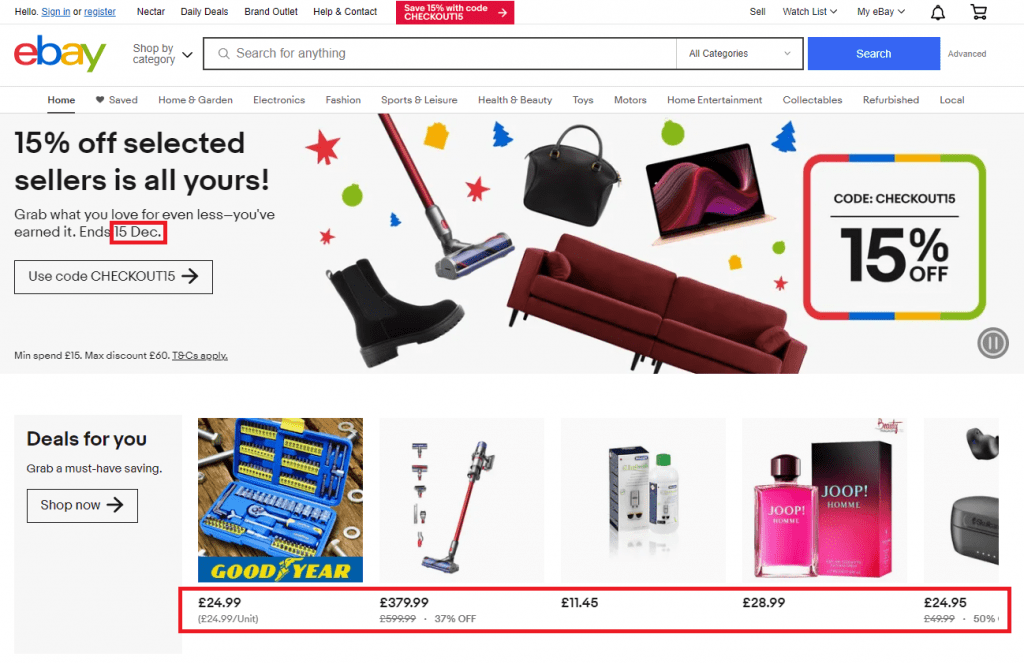
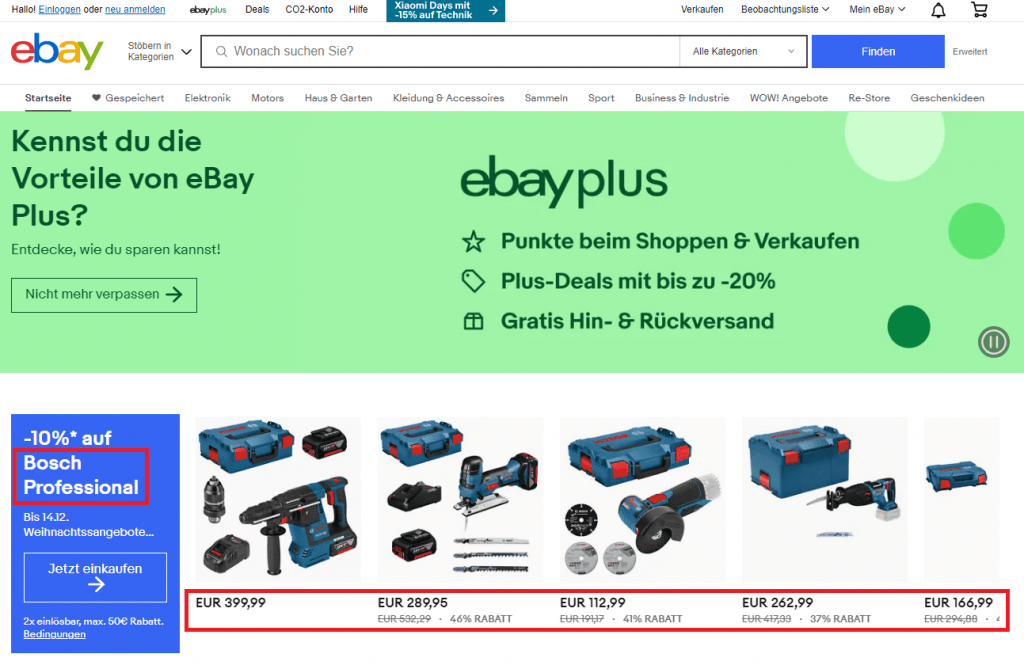
eBay’s approach to localisation illustrates attention to detail at scale. Their UK and German sites are not simply translated versions of each other. Each version uses the correct local currency, highlights locally popular product categories, formats dates according to regional conventions, and adapts the entire interface so the shopping experience feels native. The result is a seamless experience that a shopper in Hamburg would not immediately recognise as originating from a US company.
ASOS: 60% of growth from international markets
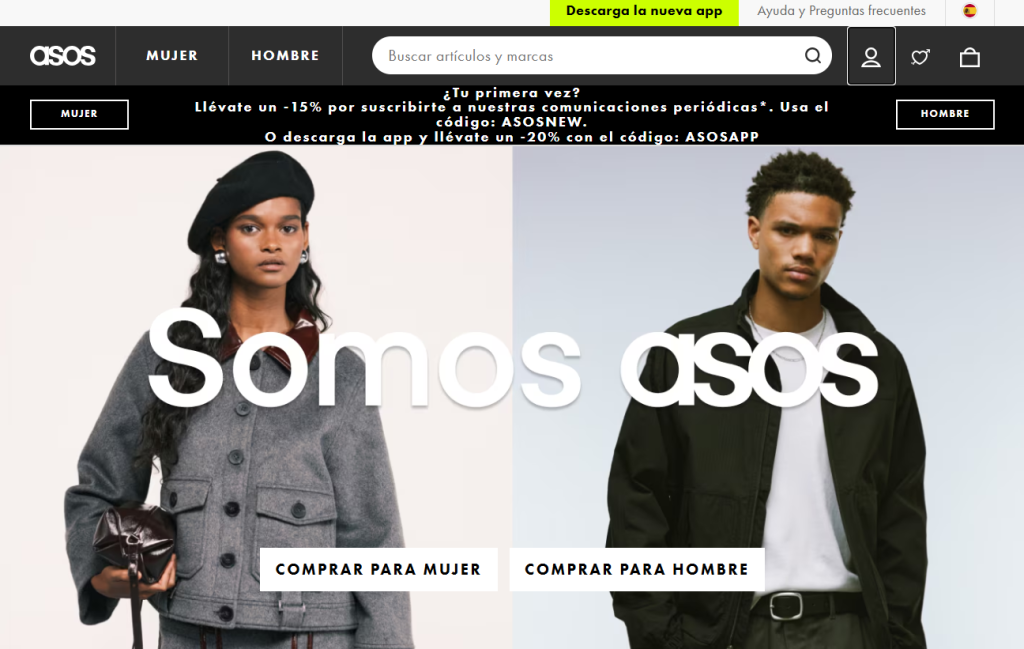
British fashion retailer ASOS implemented ecommerce localisation as a core growth strategy rather than an afterthought. The company translated its entire site into seven languages, offers ten payment methods across 19 currencies, and provides localised customer service, social media presence, and express delivery options in key markets (Smartling Retail Data Report). ASOS’s international strategy accelerated growth and increased international sales from less than 30% to more than 60% in under three years (MotionPoint case study). This level of localisation helped ASOS reach 23 million active customers globally (Business of Apps), with international retail sales accounting for up to 67% of total retail sales at their peak (Kwintessential).
Amazon India: localisation for a fragmented market
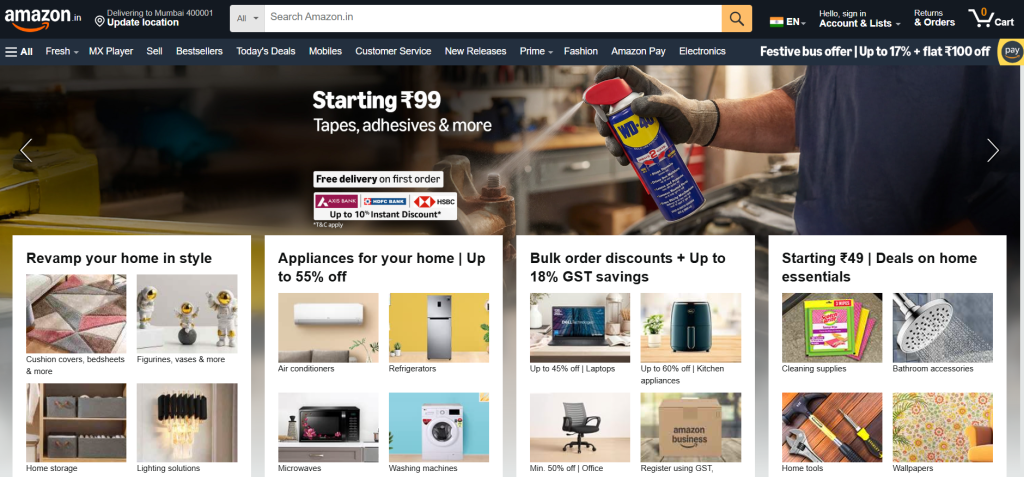
Amazon’s expansion into India is a case study in how deep localisation can go. The company modified its app to work on inexpensive smartphones, added product descriptions in multiple Indian languages including Hindi, Tamil, Telugu, Kannada, and Malayalam, and built an entirely new logistics network to reach beyond metropolitan areas (The Drum; Brand2Global). India is not a single market. It is hundreds of linguistic and cultural micro-markets, with over 20 languages spoken by at least one million people. These localisation investments contributed to a reported 49% revenue growth in India in 2021 (Kwebmaker).
Booking.com: centralised platform, aggressive localisation
Booking.com uses a single domain with subdirectories and hreflang annotations for each language-region pair. The design stays consistent across markets, but every element, from room descriptions to pricing, reviews, and CTAs, is localised. They detect the user’s language from browser settings while allowing manual switching with persistent preference. The result is high international rankings and strong conversion rates across dozens of markets, all managed from a centralised platform (Search Engine Land).

How culture shapes ecommerce behaviour
Understanding cultural differences is what separates effective localisation from surface-level translation. Geert Hofstede’s cultural dimensions framework is one of the most widely used tools for this, and it has direct implications for ecommerce. We covered how these dimensions affect search patterns in our post on culture and search behaviour in SEO, and how psychological biases interact with cultural context in our piece on cognitive biases in international marketing. Below is a summary focused on ecommerce-specific implications:
| Dimension | Ecommerce impact | Localisation implication |
| Individualism vs collectivism | Collectivist cultures rely on social proof; individualist cultures respond to personal choice messaging | Emphasise reviews and community endorsement in collectivist markets; personal benefits in individualist ones |
| Uncertainty avoidance | High uncertainty avoidance (Germany, Japan) demands detailed specs and guarantees | Provide extensive product detail, certifications, and risk-reduction messaging |
| Masculinity vs femininity | Masculine cultures (Italy, Japan) value status; feminine cultures (Sweden) value quality and modesty | Adapt marketing tone: prestige-oriented vs quality-and-sustainability-oriented |
| Power distance | High power distance cultures respond to authority and expertise signals | Use expert endorsements, certifications, and authority positioning |
| Long-term vs short-term orientation | Long-term oriented cultures (China) focus on lasting value; short-term cultures respond to deals | Adjust promotional messaging and value proposition framing accordingly |
The practical takeaway is that localisation is not about replacing words. It is about adapting the entire persuasion framework to match how people in a given culture make purchasing decisions.
Mobile commerce and localisation
Mobile commerce accounts for approximately 59% of all online retail sales globally, reaching roughly $4 trillion. In many emerging markets, mobile is not just the primary shopping channel, it is the only one. Localising for mobile means more than responsive design. It means considering that in some markets, shoppers access ecommerce on inexpensive smartphones with limited bandwidth. Page load times, image compression, and simplified checkout flows become critical. Payment integrations like Apple Pay, Google Pay, and region-specific mobile wallets (M-Pesa in East Africa, GrabPay in Southeast Asia) need to be part of the localised experience. If your business also has a native app, mobile app localisation becomes equally important.
The role of AI and machine translation in ecommerce localisation
Machine translation has improved dramatically in recent years, and it has a legitimate role in ecommerce localisation, particularly for high-volume, lower-priority content like internal documentation, user-generated reviews, or initial drafts that will be reviewed by human translators. CSA Research found that 66% of consumers use online machine translation to read content in foreign languages, which tells us that shoppers are already encountering MT output.
Where machine translation falls short is in marketing-sensitive content, legal text, and anything where cultural nuance matters. Product descriptions that drive conversions, checkout flows, and brand messaging all benefit from human expertise. The most effective approach for most ecommerce businesses is a hybrid model: use MT for volume and speed, then apply human review and localisation where it counts.
For a more detailed look at where machine translation fits and where it does not, see our article on whether machine translation will replace human translators. And if you are considering AI-assisted workflows for multilingual SEO specifically, our guide on using AI safely in multilingual SEO covers the practical trade-offs.
Ecommerce localisation best practices
After working with ecommerce businesses across multiple markets, here are the practices that make the biggest difference:
Research the market before you localise
Understand the local ecommerce landscape, dominant platforms, payment preferences, delivery expectations, and cultural norms before you start adapting content. Localising into a market you do not understand is a recipe for expensive mistakes.
Start with your highest-impact pages
You do not need to localise everything on day one. Start with product pages, the checkout flow, and key landing pages. Validate market demand with a minimum viable localised experience before investing in full-site adaptation. Some businesses use a landing page and a few translated product descriptions to test demand before committing to comprehensive localisation.
Invest in SEO from the start
Do not treat SEO as an afterthought. Implement hreflang tags, choose your URL structure, conduct multilingual keyword research, and optimise metadata before launch. Retrofitting SEO onto a localised site is always harder and more expensive than building it in from the beginning. For teams struggling with international SEO performance, we wrote about how international SEO teams can close the viability gap.
Use local payment methods
Offering the right payment options removes one of the biggest conversion barriers. Research which methods dominate in each market and integrate them into your checkout. iDEAL in the Netherlands, Klarna in Germany and Sweden, Boleto in Brazil, MercadoPago in Argentina, Alipay and WeChat Pay in China. Skipping this step means losing sales to competitors who got it right.
Maintain brand consistency across markets
Localisation does not mean losing your brand identity. CSA Research found that a strong, consistent brand can have a similarly positive effect on ecommerce sales as localisation itself. The goal is to adapt the expression of your brand for each market while keeping the core identity intact. Style guides, tone-of-voice documentation, and glossaries are essential tools for achieving this balance at scale. We covered the strategic side of this in our guide to building a global content marketing strategy.
Leverage user-generated content
Local reviews, social media posts, and community content are powerful trust signals. Encouraging customers in each market to leave reviews in their language builds credibility that no amount of brand-produced content can replicate. 73% of consumers prefer products with reviews in their language.
Localise for market-specific events
Black Friday is a major shopping event in the US and increasingly in Europe, but it is irrelevant in China, where Singles’ Day (11/11) and the 618 Shopping Festival are far more significant. Around 50% of Indian consumers delay online purchases until Diwali sales week. Aligning your promotional calendar with local shopping events shows cultural awareness and captures seasonal demand.
Partner with in-market specialists
Machine translation tools can handle volume, but they cannot replace the cultural knowledge that local linguists and ecommerce specialists bring. Working with translators who understand both the language and the market, and who can apply SEO translation and transcreation where needed, produces significantly better results than relying on generic translation.
Ecommerce localisation checklist
Use this checklist to assess your readiness for international ecommerce expansion:
- Market research completed: local ecommerce landscape, competitors, and consumer preferences understood
- URL structure decided: ccTLD, subdomain, or subdirectory
- Hreflang tags implemented correctly with reciprocal references and x-default
- Multilingual keyword research completed for target markets
- Product descriptions localised with culturally appropriate language and local keywords
- Checkout flow adapted: local currencies, payment methods, address formats
- SEO metadata (titles, descriptions, alt tags) localised with researched keywords
- Legal pages adapted to comply with local consumer protection and data privacy laws
- UI and UX tested for text expansion, RTL layouts, and cultural appropriateness
- Images and visuals reviewed for cultural relevance
- Customer support available in local language (agents, chatbot, or FAQ)
- Mobile experience localised and tested on regionally popular devices
- Promotional calendar aligned with local shopping events and holidays
- Measurement framework in place: organic traffic by market, conversion rates, bounce rates
- Ongoing localisation workflow established for new content and product listings
How to measure ecommerce localisation success
Localisation does not deliver immediate, directly attributable sales in the way paid ads do. It works through improved discoverability, higher engagement, and stronger conversion rates over time. Here are the metrics that tell you whether your localisation is working:
| Metric | What it tells you | What to look for |
| Organic traffic by market | Whether your localised pages are being found | Steady growth in organic sessions from target markets |
| Conversion rate by language/market | Whether localised pages persuade shoppers to buy | Comparable or higher CVR vs your primary market |
| Bounce rate by market | Whether shoppers feel the page is relevant | Lower bounce on localised vs non-localised pages |
| Cart abandonment by market | Whether checkout meets local expectations | Declining abandonment after payment localisation |
| Average order value by market | Whether pricing localisation resonates | AOV aligned with local purchasing power |
| Customer lifetime value by market | Whether localisation drives repeat purchases | Growing CLV in localised markets over time |
| Hreflang errors in Search Console | Whether your technical implementation works | Zero or declining hreflang errors |
Segment your analytics by market and language from day one. Without this granularity, you will not know which markets are performing and which need further attention.
Getting started with ecommerce localisation
Ecommerce localisation is one of the highest-ROI investments an online retailer can make when expanding internationally. The data consistently shows that shoppers prefer, trust, and buy from sites that feel like they were built for their market. The businesses that get this right, ASOS, Booking.com, Amazon, do not treat localisation as a box-ticking exercise. They treat it as a core part of their growth strategy.
If you are planning to expand into Spanish-speaking, English-speaking, or German-speaking markets, or need help with SEO translation, marketing translation, or website localisation, get in touch with us.
Frequently asked questions about ecommerce localisation
What is ecommerce localisation? Ecommerce localisation is the linguistic and cultural adaptation of an ecommerce website to appeal to customers in a specific region. It covers website content, search engine optimisation in each target market, visual design adapted for local audiences, local payment methods and currencies, logistics handling, and customer service in the local language. The goal is to create an end-to-end shopping experience that feels like it was built for the target market, not just translated from the English version.
Why does ecommerce localisation matter for sales? Two studies make the case clearly. CSA Research’s “Can’t Read, Won’t Buy” survey found that 52% of consumers buy only from websites where information is presented in their own language, and 72.1% spend most of their time on websites in their native language. The Nimdzi “Project Underwear” study, which tested localised and non-localised ecommerce sites for the same products, found that localised sites consistently outperformed on both traffic and conversion. The language gap costs money in the most direct possible way: people leave if they can’t read the site.
What does ecommerce localisation include? It starts with content: product descriptions, category pages, FAQs, and checkout copy. It extends to SEO (keyword research in the target language rather than translated keywords from the source language), design (layout preferences differ significantly between markets), payment methods (what works in the UK doesn’t necessarily work in Brazil or Germany), and customer service. For markets with specific regulatory requirements, legal content including return policies and consumer rights disclosures needs adapting too.
What are the main challenges of ecommerce localisation? Volume is the most common practical challenge: large ecommerce operations upload hundreds or thousands of product listings, and localising all of that requires a workflow, not just a translator. Cultural differences create a second layer of complexity, because what’s acceptable design or copy in one market can actively put customers off in another. Legal requirements vary by jurisdiction. And design adaptations (since translated text often occupies significantly more space than English) can affect page layouts and require rework.
Is the Chinese ecommerce market a good example of why localisation matters? China is the world’s largest ecommerce market, and it illustrates the localisation challenge clearly. A sub-market of Chinese online shoppers who buy from foreign sites (known as “hai-tao”) has grown substantially, and research has found that 53% of Chinese high-net-worth individuals would prefer it if luxury ecommerce sites included Chinese cultural references in their advertising. Many foreign retailers miss this even as they try to enter the market.
Does ecommerce localisation affect customer trust? Yes, directly. Users who encounter a site in a foreign language perceive it as less trustworthy, and those perceptions affect purchase decisions before a visitor even reads the product details. Localised sites reduce this friction at every stage of the customer journey, including the checkout, where unfamiliar payment methods or missing local trust signals can cause users to abandon the purchase right at the point of conversion.

Author: Maria Scheibengraf
Maria Scheibengraf is an English-to-Spanish marketing and SEO translator specialised in software (SaaS, martech, fintech), and Operations Manager at Crisol Translation Services, which she co-founded in 2016. With a solid background in programming and marketing, Maria has an in-depth understanding of the technical intricacies involved in software programs, websites, and digital platforms. Maria is also the author of The SEO Translation Bible.


